Two Different Disciplines. Two Different Outcomes. Knowing the Difference Changes How You Market Your Project.
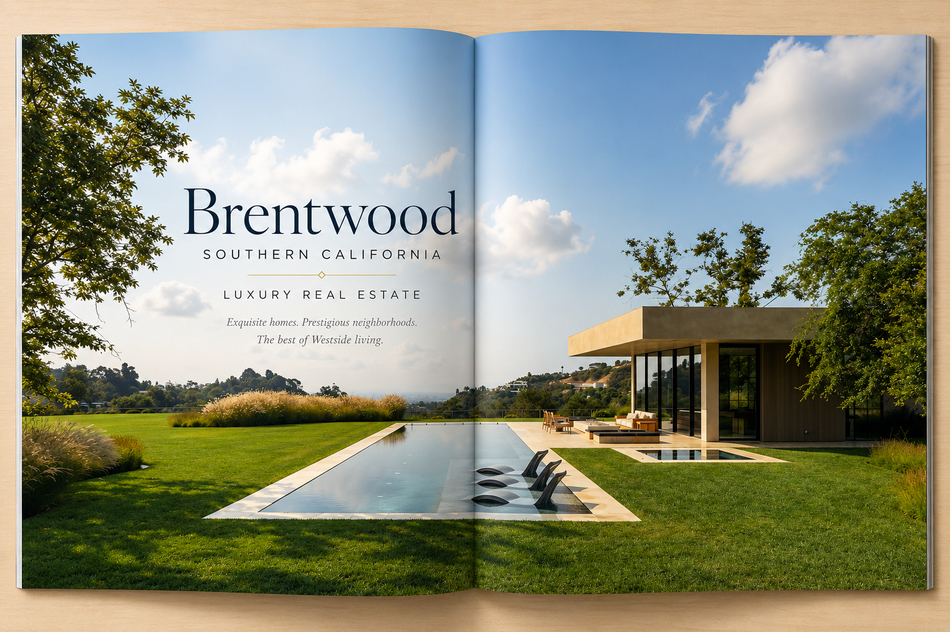
Most developers use the terms architectural photography and real estate photography interchangeably. They are not the same. They serve different purposes, speak to different audiences, and produce fundamentally different images. Understanding the distinction is not an academic exercise. It is a practical decision that determines how your project is perceived by tenants, investors, design press, and the broader market before anyone ever visits the site.
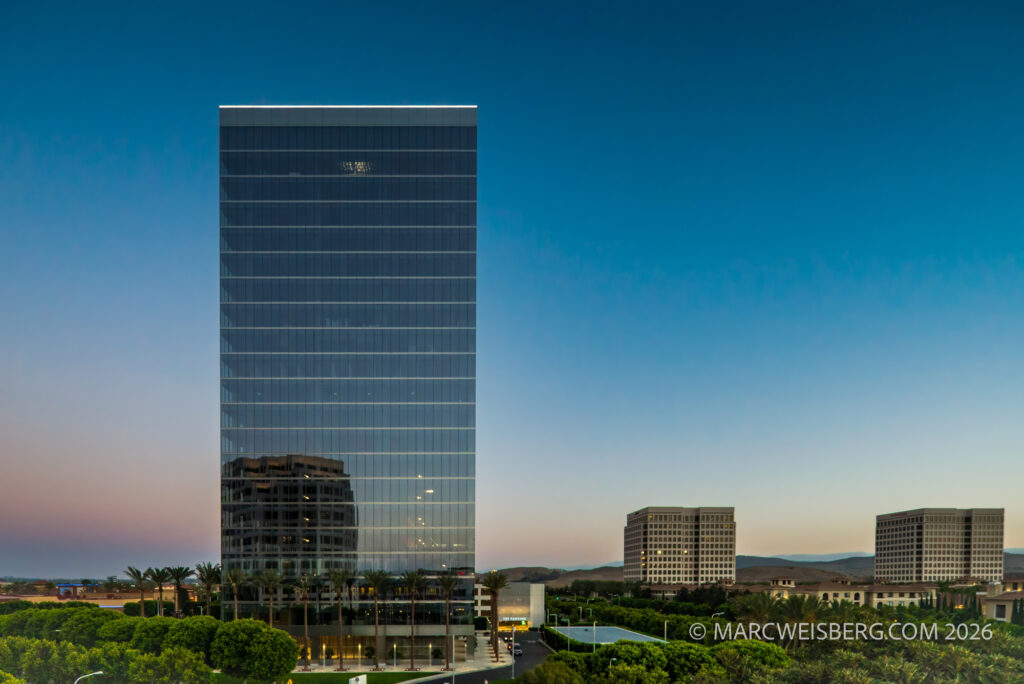
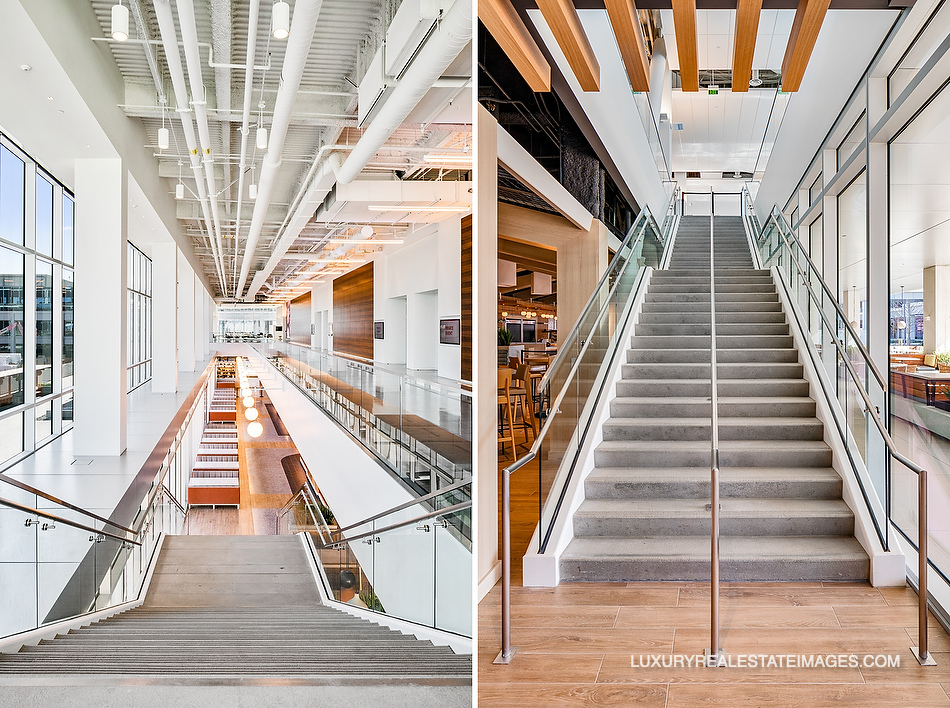
Architectural photography Southern California developers rely on for their most important projects is not about documenting square footage or communicating floor plate efficiency. It is about capturing the design intent of a building, the quality of the materials, the relationship between the structure and its environment, and the experience of moving through the space. It is photography that speaks to the architect, the design community, the institutional investor, and the high-end tenant simultaneously.
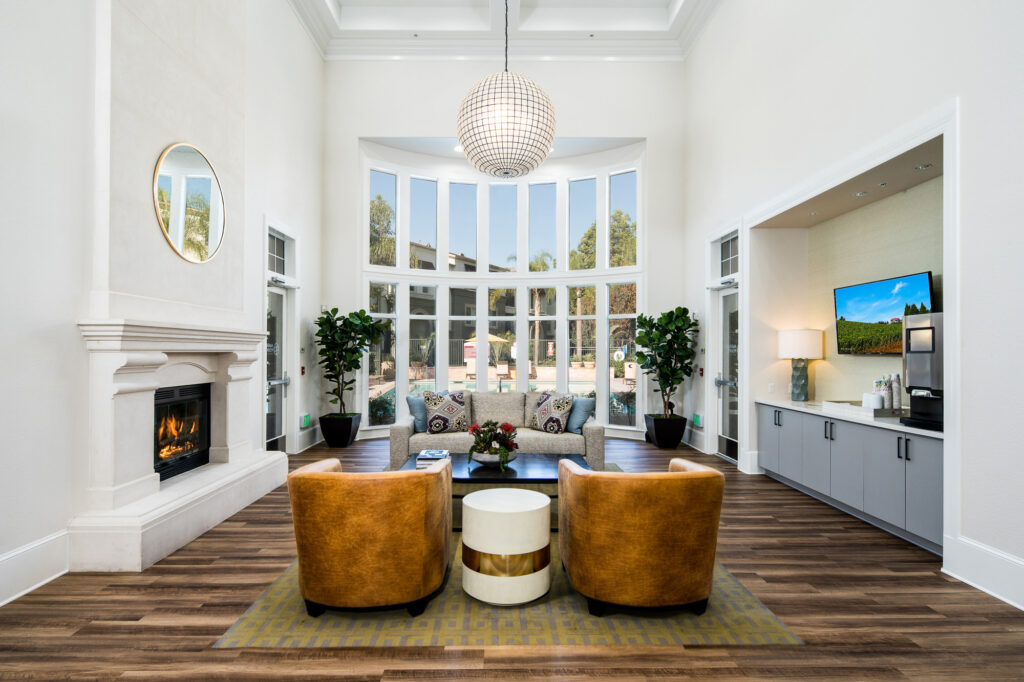
Real estate photography, even at the luxury level, serves a different purpose. It communicates the functional quality of a space to a prospective tenant or buyer. It answers the question of what it would be like to occupy this property. Both disciplines are valuable. The most sophisticated developers in Southern California use both and they use Marc Weisberg for both because he is one of the few photographers in the region who executes both at the highest level.
“Architectural photography captures what a building means. Real estate photography communicates what it is like to occupy it. Both are essential. Neither substitutes for the other.”
Orange County · Los Angeles · San Diego
Architectural and Commercial Real Estate Photography
Trusted by CBRE, Irvine Company, Rexford Industrial, and Clune Construction.
Your 10-minute call is free. Your image is everything.
What Architectural Photography Is and What It Is Designed to Do
“Architectural photography is not documentation. It is interpretation. It communicates the design intent of a building to an audience that evaluates design.”
Architectural photography begins with a fundamental question that real estate photography does not ask: what is this building trying to say? The answer to that question determines every compositional and lighting decision in the shoot. It determines which details are worth capturing, which angles tell the design story most compellingly, and which moments of light reveal the architect’s intent most powerfully.
* The audience it speaks to. Architectural photography speaks to the design community, the press, the awards circuit, and the institutional clients who evaluate a developer’s portfolio of work as much as they evaluate individual assets. It is the photography that appears in Architectural Record, on the architect’s website, in the developer’s annual report, and in the presentations they make to prospective development partners.
* What it captures. Material quality. Structural elegance. The relationship between interior and exterior. The play of natural light across a facade at different times of day. The detail work that makes a building extraordinary rather than merely functional. The spatial experience of moving through a well-designed space. These are the subjects of architectural photography. They require a different eye, a different technical approach, and a different understanding of what constitutes a successful image.
* When developers need it. Architectural photography is essential for any developer who wants their project recognized by the design community, considered for industry awards, featured in design publications, or positioned as a portfolio asset that demonstrates their commitment to design quality. It also attracts the highest-caliber tenants who choose their space based on the design story of the building as much as the lease economics.
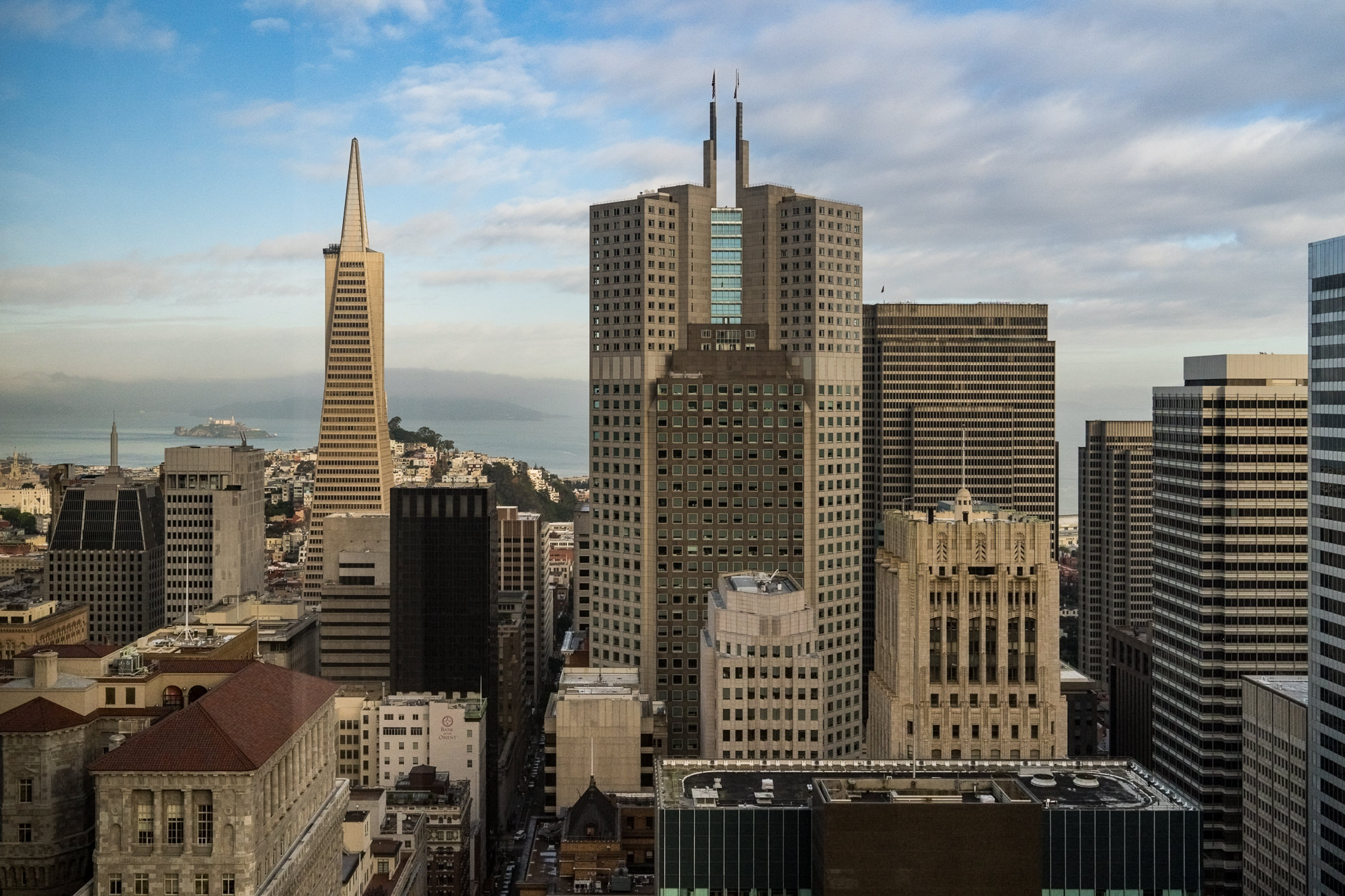
What Real Estate Photography Is and What It Delivers for Developers
“Real estate photography answers the question every prospective tenant asks before they request a tour. What will it feel like to work here?”
Commercial real estate photography at the luxury level is a distinct discipline from architectural photography but equally demanding in its own way. Where architectural photography asks what a building means, real estate photography asks what it is like to occupy it. It is the photography that drives leasing decisions, supports offering memorandums, and communicates the functional quality of a space to a prospect who is making a business decision.
* The audience it speaks to. Commercial real estate photography speaks to tenant representatives, corporate real estate teams, institutional investors, and acquisition professionals. These audiences are evaluating the property through a functional lens. They want to understand the quality of the finish, the efficiency of the floor plate, the quality of the natural light, and the experience their employees and clients will have in the space.
* What it captures. Lobby quality and the first impression it creates. Office floor plans and their flexibility. Amenity spaces and the lifestyle they communicate. Exterior positioning and the status signals it sends. The images need to answer the functional questions a prospective tenant has before they commit to a site visit. They need to be accurate enough to set correct expectations and compelling enough to motivate action.
* When developers need it. Commercial real estate photography is essential for every property that goes to the leasing market. For new developments it is part of the pre-leasing campaign. For repositioned assets it is the visual signal that communicates what has changed. For stabilized assets it is the ongoing marketing library that keeps a property competitive in its submarket over time.
Why the Most Sophisticated Southern California Developers Use Both
“The developers who build the best projects and achieve the best outcomes use architectural photography to build their brand and real estate photography to fill their buildings.”
The most sophisticated developers in Southern California do not choose between architectural photography and real estate photography. They use both as part of a coordinated visual strategy that serves different audiences simultaneously. The architectural photography builds the developer’s brand with the design community, the press, and institutional partners. The real estate photography drives the leasing and sales campaign with tenant reps, investors, and brokers.
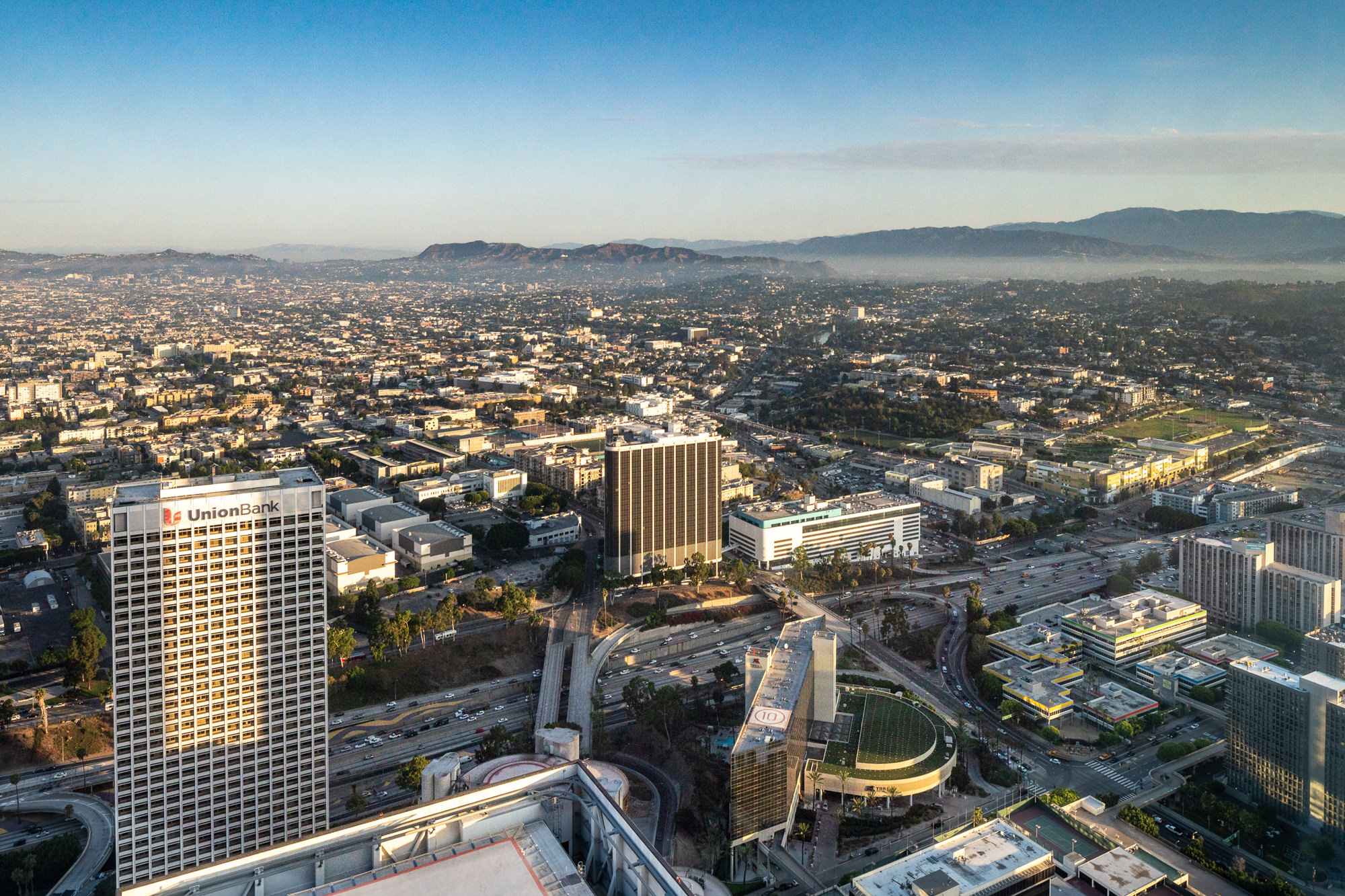
A new Class A mixed-use development in Irvine or a repositioned office campus in West Los Angeles serves multiple audiences at the same time. The architect needs images for their portfolio and award submissions. The developer needs images for their investor presentation and annual report. The brokerage team needs images for their leasing campaign on LoopNet and CoStar. Each of these audiences has different needs. A single well-planned shoot with a photographer who understands both disciplines can serve all of them.
Marc Weisberg is one of a small number of photographers in Southern California who operates at the highest level in both categories. The technical precision of his architectural work and the marketing effectiveness of his real estate work come from the same foundation of 26 years working exclusively at the top of the market. Developers who work with him once rarely work with anyone else.
Orange County · Los Angeles · San Diego
Architectural and Commercial Real Estate Photography
Trusted by CBRE, Irvine Company, Rexford Industrial, and Clune Construction.
Your 10-minute call is free. Your image is everything.
What Clients Are Saying
Real Client Experiences
“Thrilled is a perfect adjective to describe how we feel about your photography. Across a ten property portfolio, your work consistently stands out. Good content with good weather always helps, but the different vantage points, ground level, drone and aerial, along with images taken at different times of day, is a real differentiator.”
Kurt Altvater
Senior Vice President, Capital Markets, CBRE
“Working with Marc on a very high-profile listing in Beverly Hills was an exceptional experience from start to finish. Marc is professional, communicative, and easy to work with every step of the way, and the quality of his photography exceeded my expectations. Marc has an incredible eye for architecture. He captured the building and its surrounding structures in a way I honestly didn’t think was possible, finding angles and perspectives that brought the whole property to life. Marc’s work is simply in a different class from the average real estate photographer, with a level of artistry and precision that sets him apart. I couldn’t be happier with the results and will absolutely be working with him again on future projects.”
David J. Ickovics
Principal, CAG Real Estate, Beverly Hills
★★★★★
“These are incredible. Our marketing team actually used the word incredible. We are super excited to get these out there and get some tenants in this space.”
Rexford Industrial Properties
Commercial Real Estate
★★★★★
“We have worked with Marc on commercial photo shoots and he always maintains a sense of professionalism within our client spaces. Marc’s images are top-notch. Highly recommended.”
Alison Kermode
Clune Construction Company
★★★★★
“Marc’s work consistently exceeds expectations. His attention to detail and ability to capture the essence of a property is unmatched. Our clients are always impressed.”
Tanya von Marschner
HFF Brokerage
★★★★★
“Marc has an incredible ability to translate project intent into compelling imagery. His consistency across large-scale projects is what separates him from every other photographer we have worked with.”
Terence Truong
IG1 Communications
Frequently Asked Questions
* Can one shoot produce both architectural and real estate photography? Yes and this is the most efficient approach. A well-planned shoot with a photographer who understands both disciplines can produce images that serve the design community and the leasing campaign simultaneously. The shot list simply needs to be built with both audiences in mind from the beginning.
* Which type of photography should I prioritize for a new development? For most new commercial developments in Southern California, real estate photography that drives the leasing campaign is the first priority. Architectural photography that builds the developer’s brand and serves the design community is equally important but can be produced in a second phase once the building is fully occupied and staged.
* Do architects typically commission their own photography separately from developers? Yes. Architects often commission their own photography for award submissions, portfolio documentation, and press. When Marc Weisberg photographs a project for a developer, the architectural images frequently serve the architect’s needs simultaneously. This is one of the advantages of working with a photographer who executes both disciplines at the highest level.
* What Southern California markets do you serve for architectural photography? We serve the full Southern California market for architectural photography including Irvine, Newport Beach, Los Angeles, Santa Monica, Culver City, Downtown Los Angeles, West Hollywood, and San Diego including UTC and Del Mar.
* How does architectural photography differ technically from real estate photography? Architectural photography typically involves longer shoots, more deliberate lighting setups, a greater emphasis on detail and material quality, and a post-production process focused on accuracy and editorial quality rather than marketing optimization. Real estate photography prioritizes images that communicate spatial quality and occupancy appeal efficiently across multiple platforms simultaneously.
One Photographer. Both Disciplines. Every Audience Your Project Needs to Reach.
“The most sophisticated developers in Southern California do not split their photography between two photographers. They find one who executes both at the highest level.”
The distinction between architectural photography and real estate photography matters because the audiences they serve are different and the images they require are different. But for a Southern California developer who needs both, working with a photographer who understands both disciplines deeply is far more efficient and far more consistent than splitting the work between specialists.
If you are developing, repositioning, or marketing a commercial project in Southern California and want photography that serves every audience your project needs to reach, schedule a free 10-minute consultation today. Architectural and commercial real estate photography in Southern California at the highest level is what Marc Weisberg has delivered for 26 years.
Orange County · Los Angeles · San Diego
Architectural and Commercial Real Estate Photography
Trusted by CBRE, Irvine Company, Rexford Industrial, and Clune Construction.
Your 10-minute call is free. Your image is everything.
View the architectural and commercial photography portfolio
Marc Weisberg is an Orange County-based architectural photographer with over 26 years of experience serving luxury residential, commercial, and multi-family clients throughout Southern California. A Sony Artisan of Imagery from 2015 to 2021, a designation held by fewer than 50 photographers worldwide. Recent clients include Christie’s International Real Estate, The Irvine Company, CBRE, Westfield, Berkshire Hathaway Home Services, Clune Construction, and Rexford Industrial.