What to Expect From a Commercial Real Estate Photo Shoot:
A Step by Step Guide for Developers, Brokers, and Property Managers
If you have never booked a commercial real estate photo shoot at the institutional level, the process can feel opaque. What happens before the photographer arrives? How long does the shoot take? What do you need to prepare on your end? And how quickly can you expect finished images ready for your leasing campaign, broker deck, or investor presentation?
This guide walks you through the entire process, from the initial consultation through final delivery. Whether you manage a Class A office tower in Irvine, a retail center in Los Angeles, an industrial logistics facility in the Inland Empire, or a mixed-use development in San Diego, the fundamentals are the same. Understanding what to expect lets you prepare your property, align your team, and get the most value from the shoot.
Marc Weisberg has photographed commercial real estate for CBRE, Irvine Company, Cushman and Wakefield, JLL, Clune Construction, and Rexford Industrial across Southern California for over 26 years. The workflow described here reflects what institutional clients experience on every assignment. Learn more about Marc’s commercial real estate photography services.
Phase 1: The Pre-Shoot Consultation and Brief
Every commercial real estate photo shoot starts with a brief. This is not a casual phone call. It is a structured conversation where the photographer learns what the images need to accomplish, who the audience is, and what deliverables are required.
What the photographer needs from you:
- The end use for the images. Are these for a leasing brochure, an investment sales package, a broker pitch deck, a website refresh, press and awards submissions, or all of the above? Each use case affects shot selection, composition, and post-production.
- The asset class and square footage. A 500,000 square foot industrial logistics facility requires a fundamentally different approach than a 20,000 square foot creative office in Newport Beach. Understanding scale determines timeline, equipment needs, and whether drone or helicopter aerials are warranted.
- Key selling points. What makes this property competitive? New lobby renovation, Class A finishes, proximity to transit, LEED certification, 360 degree views from the top floor. The photographer needs to know what to emphasize.
- Timeline and deadline. When do you need final images delivered? Institutional clients often work against leasing campaign launch dates, investor reporting deadlines, or awards submission windows.
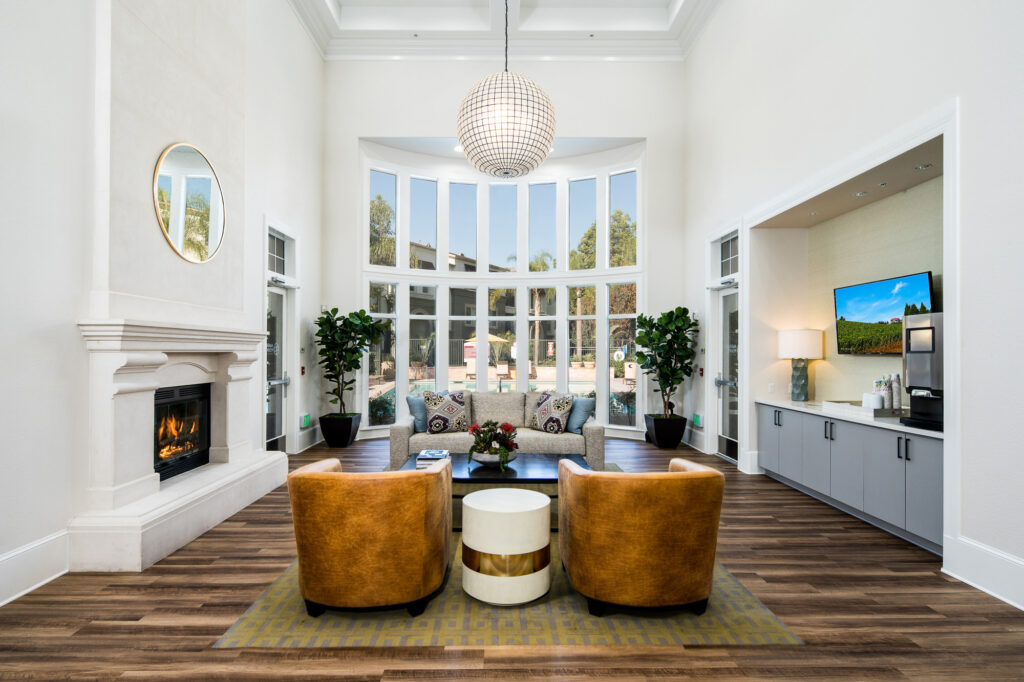
From this conversation, the photographer produces a shot list. This is the blueprint for the entire shoot. A typical commercial assignment includes 30 to 80 planned shots depending on property size and scope. The shot list covers exteriors (daylight and twilight), interiors (lobbies, common areas, amenity spaces, model suites), detail shots (finishes, signage, wayfinding), and aerials if applicable.
“The brief determines everything. Without understanding the leasing narrative, the investor audience, or the campaign timeline, even technically perfect images miss the mark.”
Phase 2: Preparing Your Property for the Shoot
Property preparation is where many commercial photo shoots succeed or fall short. The photographer can only capture what is in front of the lens. Preparation is your responsibility, and the difference between a good property prep and a great one shows directly in the final images.
Checklist for property preparation:
- Landscaping and hardscape. Trim hedges, clean walkways, remove debris, ensure irrigation has run recently so landscaping looks fresh. For new developments, coordinate with your landscape contractor to stage any remaining plantings before the shoot date.
- Lobby and common areas. Fresh flowers or staging if available. Remove clutter, personal items at reception desks, and any temporary signage. All lights should be on and working, including accent lighting and display case lighting.
- Windows and glass. Schedule window cleaning for the day before or morning of the shoot. Dirty glass reads immediately in photographs, especially in exterior and lobby shots.
- Parking lots and loading areas. Clear debris, sweep if needed, and consider limiting the number of vehicles visible during exterior shots. For industrial properties, staged truck bays photograph better than empty ones.
- Tenant coordination. If the building is occupied, notify tenants about the shoot schedule. Some shots may require brief access to corridors, amenity spaces, or specific floors.
- Access and logistics. Ensure the photographer has roof access for elevated shots, access to mechanical areas if construction documentation is part of the scope, and parking for equipment loading.
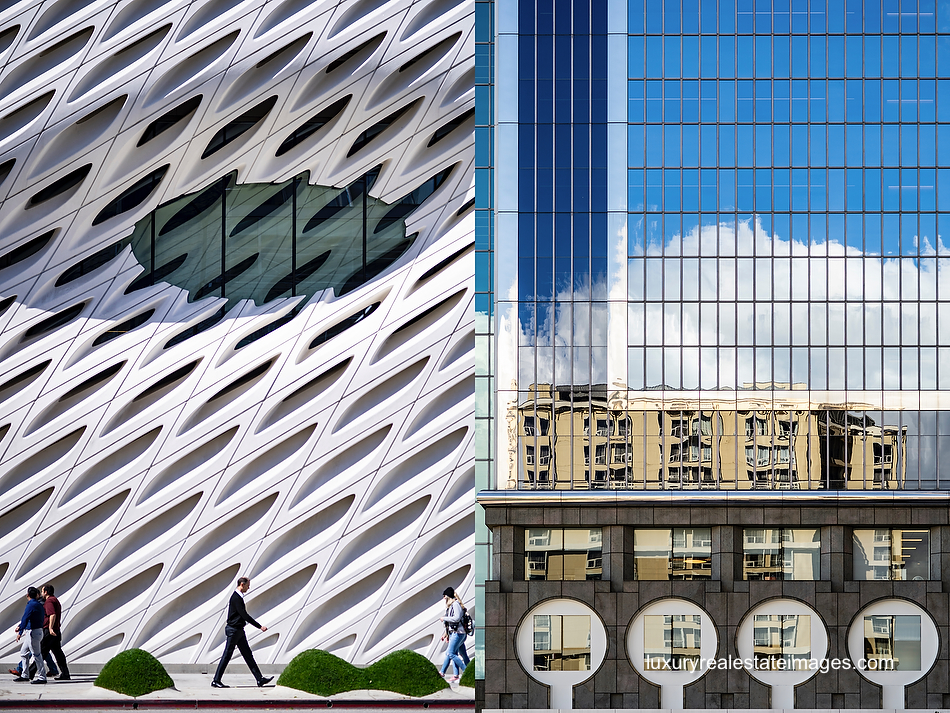
Phase 3: What Happens on Shoot Day
A commercial real estate photo shoot is methodical. The photographer follows the shot list, working through the property systematically to capture every planned composition during optimal lighting conditions.
Typical shoot day timeline for a mid-size commercial property:
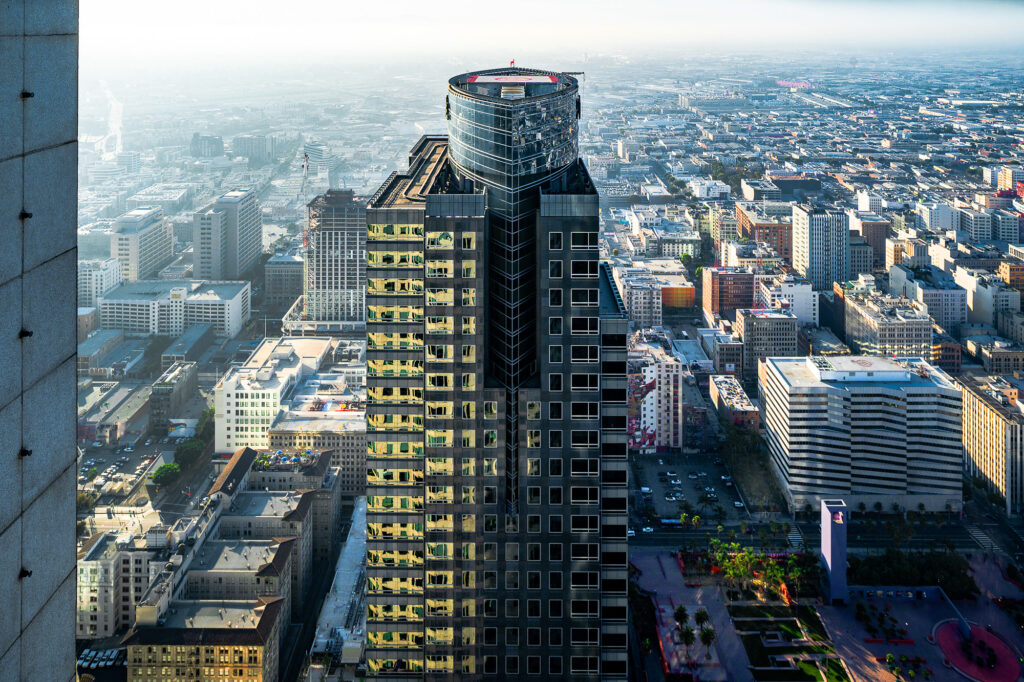
- Morning (golden hour through mid-morning). Exterior hero shots when light is directional and warm. East-facing facades photograph best in morning light. This is also the window for drone aerials if permitted by FAA regulations and local airspace restrictions.
- Mid-day. Interior photography, including lobbies, corridors, amenity centers, fitness rooms, conference facilities, and tenant suites. Interior work continues regardless of exterior lighting conditions. Each space is lit and composed individually.
- Late afternoon. West-facing exterior shots as light shifts. Return to any morning shots that need a different angle. Construction progress documentation if applicable.
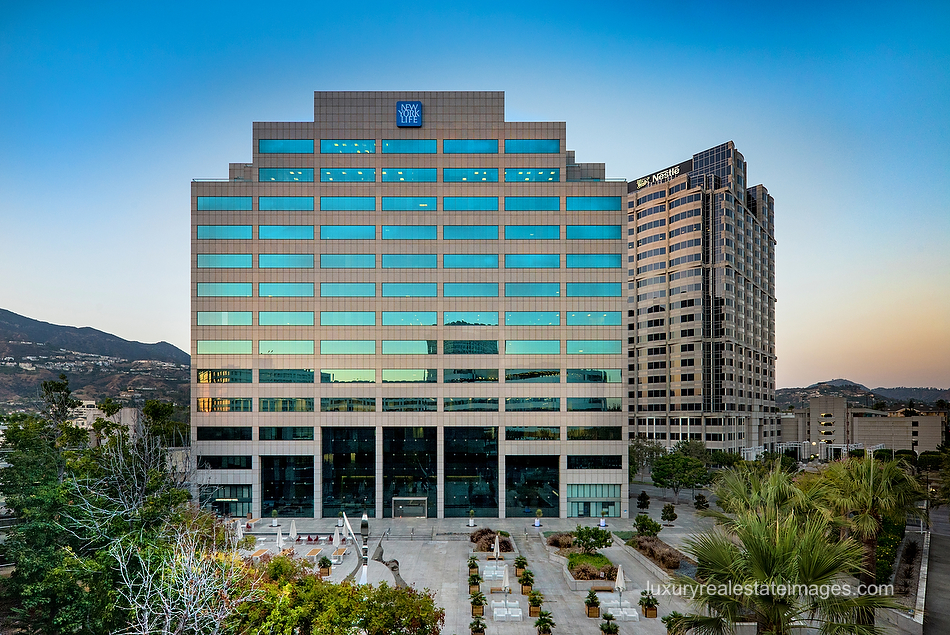
- Twilight (20 to 40 minutes after sunset). The hero exterior shot for most commercial properties. Twilight captures the building fully lit against a deep blue sky. This is the signature image that leads brochures, websites, and pitch decks. Timing is precise and the window is short.
For larger properties (200,000+ square feet, campus environments, or multi-building portfolios), the shoot may span a full day or require two sessions. The photographer will communicate this during the pre-shoot brief so you can plan staffing and access accordingly.
“Every shot on the list has a purpose. Broker deck hero, website banner, investor package detail. That alignment between the shot list and the end deliverable is what separates institutional photography from generic coverage.”
Phase 4: Post-Production and Delivery
After the shoot, the post-production phase is where raw captures become deployment-ready commercial images. This is not a simple filter and export process. Professional commercial real estate post-production includes:
- Color correction and white balance. Ensuring consistent color across all images, even when shot in different lighting conditions throughout the day.
- Perspective correction. Straightening verticals and horizontals so architectural lines are true. This is especially critical for commercial exteriors where converging verticals make a building look like it is leaning.
- Window pulls. Blending interior exposures with exterior views through windows so both the room and the view are correctly exposed. A technically demanding process that takes significant time per image.
- Sky replacement (when needed). If shoot day weather was overcast, the sky in exterior shots may be replaced with a clean blue sky that matches the intended presentation quality.
- Retouching and cleanup. Removing temporary construction elements, distracting signage, power lines, and other visual noise that detracts from the asset presentation.
Delivery format and timeline. Final images are delivered as an organized image library, tagged and sized for every use case: high-resolution files for print (brochures, signage), web-optimized files for digital campaigns and listings, and presentation-ready files for PowerPoint and pitch decks. Typical turnaround for a commercial assignment is 5 to 10 business days from shoot date, depending on scope and post-production complexity.
How to Get the Most Value From Your Commercial Photo Shoot
Developers, brokers, and property managers who get the best results from their commercial photography investment share a few practices:
- Book the shoot before the marketing deadline, not after. Photography is the first deliverable in any leasing or sales campaign. Booking at the last minute limits scheduling flexibility and may require rush turnaround.
- Be specific in the brief. “We need photos of the building” is not a brief. “We need 15 exterior compositions for the CBRE listing, 20 interior shots focused on the renovated lobby and amenity floor, and 5 aerial perspectives for the investor deck” is a brief. The more specific you are, the more targeted the results.
- Designate one point of contact. The photographer needs someone on-site who can unlock doors, turn on lights, answer questions about tenant access, and make real-time decisions about shot priorities. Having one decision maker prevents confusion and keeps the shoot moving efficiently.
- Think beyond the current campaign. A comprehensive shoot builds an image library you can draw from for months or years. Consider adding shots for future use: awards submissions, annual reports, social media, and leasing materials for spaces not yet on the market.
For a complete overview of Marc’s commercial photography services, client roster, and portfolio, visit the commercial real estate photography services page.
Frequently Asked Questions About Commercial Real Estate Photo Shoots
How long does a commercial real estate photo shoot take?
Most mid-size commercial properties (50,000 to 200,000 square feet) require a half-day to full-day shoot. Larger properties, campus environments, or multi-building portfolios may require a full day or two sessions. Timeline is discussed during the pre-shoot consultation based on the shot list and scope of deliverables.
How far in advance should I book a commercial photo shoot?
Two to three weeks advance notice is ideal for scheduling. This allows time for the pre-shoot consultation, shot list development, and property preparation. Rush assignments can be accommodated when the schedule allows.
Does weather affect a commercial real estate photo shoot?
Yes. Exterior photography depends on weather conditions. Overcast days produce flat, uninteresting results for exterior hero shots and twilight photography. If weather is unfavorable on the scheduled date, the exterior portion of the shoot is typically rescheduled to the next clear day. Interior work can proceed regardless of weather.
What is included in the final delivery?
An organized image library with files sized for every use case: high-resolution for print, web-optimized for digital campaigns and listings, and presentation-ready for pitch decks and investor materials. All images are color-corrected, perspective-corrected, retouched, and tagged for easy reference.
Does Marc serve markets outside Orange County?
Marc’s primary markets are Orange County, Los Angeles, and San Diego. He regularly travels throughout Southern California and has completed commercial and architectural projects in San Francisco, New York City, New Orleans, Paris, and Stockholm for institutional clients who require his standard regardless of location.
What Clients Are Saying
Real Client Experiences
From commercial and residential photography projects
“Thrilled is a perfect adjective to describe how we feel about your photography. Across a ten property portfolio, your work consistently stands out. Good content with good weather always helps, but the different vantage points, ground level, drone and aerial, along with images taken at different times of day, is a real differentiator.”
Kurt Altvater
Senior Vice President, Capital Markets, CBRE
“Working with Marc on a very high-profile listing in Beverly Hills was an exceptional experience from start to finish. Marc is professional, communicative, and easy to work with every step of the way, and the quality of his photography exceeded my expectations. Marc has an incredible eye for architecture. He captured the building and its surrounding structures in a way I honestly didn’t think was possible, finding angles and perspectives that brought the whole property to life. Marc’s work is simply in a different class from the average real estate photographer, with a level of artistry and precision that sets him apart. I couldn’t be happier with the results and will absolutely be working with him again on future projects.”
David J. Ickovics
Principal, CAG Real Estate, Beverly Hills
“Marc is a consummate professional photographer. He always meets our deadlines and exceeds expectations. His attention to detail and open communication provides us with confidence that we have elected the right photographer for every assignment.”
Tanya von Marschner
Executive Production Associate, HFF Brokerage
“Marc is an exceptional architectural photographer. He has a strong ability to understand a project’s intent and translate it into clean, compelling imagery that elevates the asset. His attention to detail, professionalism on site, and consistency across large projects make him a go-to partner for architectural and commercial work. Highly recommended for anyone looking to present their properties at a high level.”
Terence Truong
Production Manager, IG1 Communications
“We have worked with Marc on commercial photo shoots, and he always maintains a sense of professionalism within our client spaces. He is very responsive with our various scheduling needs. Marc’s images are top-notch. Highly recommended.”
Alison Kermode
Clune Construction Company
“These are incredible. Our marketing team actually used the word ‘incredible.’ We are super excited to get these out there and get some tenants in this space.”
Rexford Industrial Properties
Commercial Real Estate
“Marc Weisberg has photographed over fifty interior remodeling projects for Sea Pointe Home Design and Construction across Orange County, and his real estate photography is at a level you rarely see outside of national design publications. His experience shooting luxury real estate photography for top Orange County agents shows in every frame, from the lighting to the angles to the finished detail. We recommend Marc without hesitation to any contractor, designer, or agent in Southern California.”
Sea Pointe Home Design & Construction
Interior Remodeling & Construction
Orange County · Los Angeles · San Diego
Commercial Real Estate Photography Services
Trusted by CBRE, Irvine Company, and Clune Construction.
Your 10-minute call is free. Your image is everything.
Marc Weisberg is an Orange County-based commercial and architectural photographer with over 26 years of experience serving institutional clients throughout Southern California. A Sony Artisan of Imagery from 2015 to 2021, a designation held by fewer than 50 photographers worldwide, Marc’s commercial client roster includes CBRE, Cushman and Wakefield, JLL, Irvine Company, Clune Construction, and Rexford Industrial. His work has been published in over a dozen books and featured by Adobe and Sony USA. Commissions range from $5 million luxury estates to $1 billion commercial developments across Orange County, Los Angeles, and San Diego. View commercial photography services. Learn more about Marc.